The Edge of the Frame Is Doing Quiet Work
Learn how objects at the edge of the frame direct attention, shape a scene’s sense of space, and make a composition feel open, confined, or off-balance.
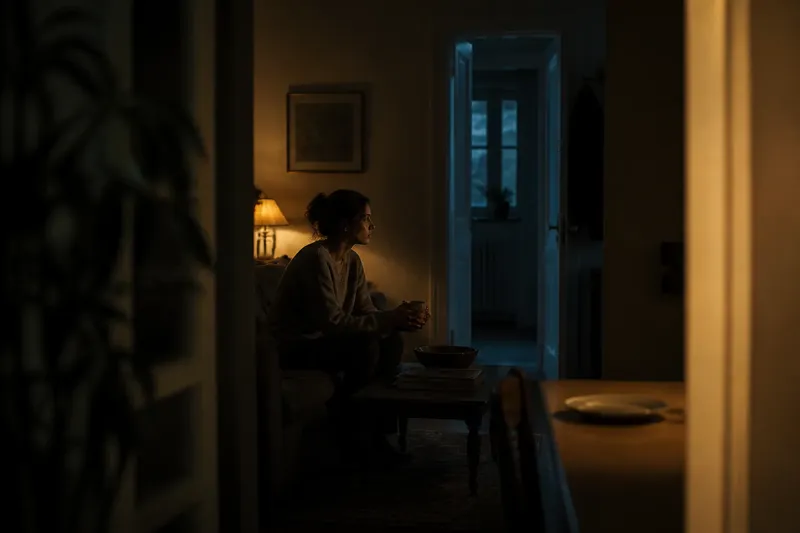
The most common framing mistake is to treat the edges as empty borders. In a film frame, a shoulder cut off at the left, a doorway squeezed against the right, or a strip of bright window can pull attention as strongly as the actor at the center. Learning to read the edge of the frame reveals how a composition steers your eye and makes a scene feel open, confined, or off-balance.
Here are seven ways those border details do their quiet work. Watch what each one makes you expect, not only what it shows.
1. A cropped object makes the unseen feel present
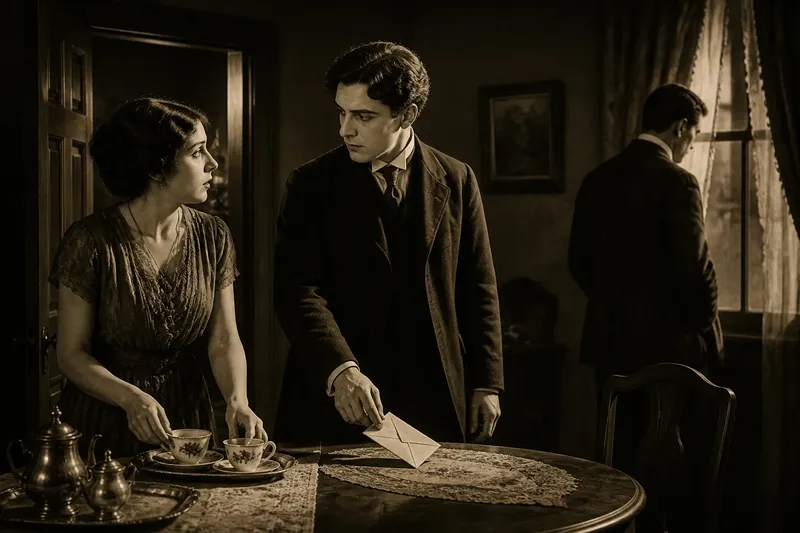
A partial object invites the mind to complete it. A hand entering from the bottom of the image suggests a person just outside view. A curtain that fills one edge hints at a room continuing beyond it. The crop gives you less information, but it can make the unseen space feel more specific.
That invitation depends on what is cut and how. A sliver of a familiar object may be easy to recognize; an indistinct dark shape may stay uncertain. Either can attract attention, but uncertainty carries a different charge. The viewer may scan the border, wondering whether the shape belongs to someone or something that has not yet been revealed.
Imagine a character sitting alone at a kitchen table, with just the corner of a second plate visible at the far edge. The plate does not prove anyone is present. It gives the empty space a question, and the viewer may look there whenever the character pauses.
2. A doorway at the border can make an exit feel close
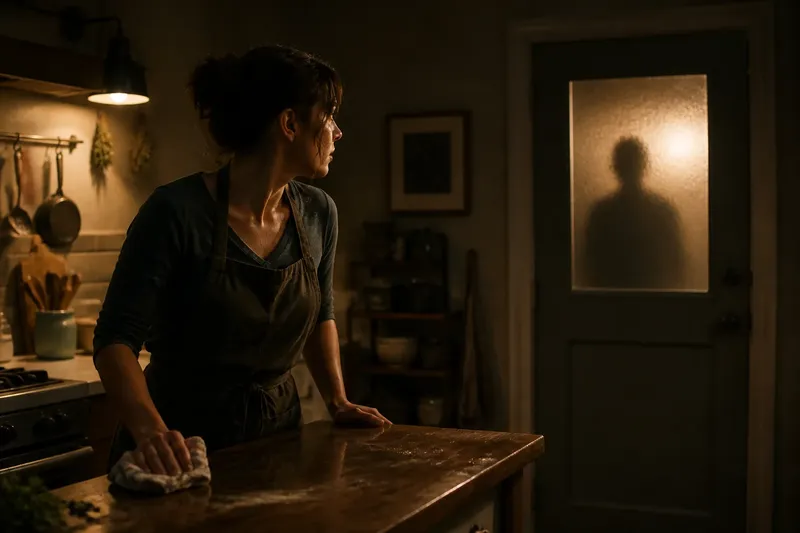
Doors and passages are strong edge objects because they suggest movement between spaces. Put an open doorway near the edge, and it can read as an available route. Push it partly out of frame, and the opening may seem more like a possibility the character cannot quite reach.
Placement matters. A passage behind a character can make the room feel connected to somewhere else. A narrow opening aligned with a figure’s gaze can make the offscreen destination seem important, even if the camera never shows it. By contrast, a doorway blocked by a foreground wall can make the same room feel sealed.
Look at how much of the opening is visible and whether the character has room to approach it. The frame can suggest escape without promising it. That tension comes from the relation between body and border, not from the doorway alone.
3. Foreground edges can turn looking into watching
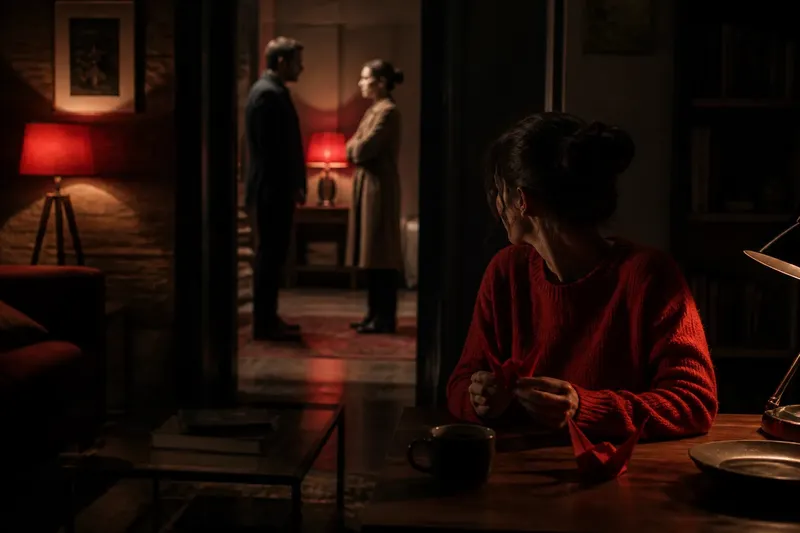
A blurred shoulder, hanging plant, fence post, or window jamb near the camera can create a visual barrier. The audience is no longer simply in the room with the subject; it may feel positioned behind something, peering through a gap. That small shift can add secrecy or distance without changing the action.
Notice whether the foreground object hides part of a face or leaves a clear sightline. A narrow gap can feel like a keyhole. A broad, soft blur may only lend depth, guiding the eye toward the subject while keeping the image open. The object’s sharpness matters too: a crisp edge can compete with a face, while a soft one often stays in the background of attention.
This is a little like looking through a half-open closet door: the room is still visible, but your position changes what you feel entitled to see. In a shot, that sense of access can make an ordinary conversation feel private, watched, or emotionally withheld.
4. An empty border can give a character room or leave them stranded
Space beside a person is not automatically blank. If a figure looks toward an open side of the frame, that space can feel like room for a response, an approaching person, or a future move. If the figure faces the edge with almost no breathing room, the image can feel pressured, as though the composition has run out of space before the character does.
The same empty area can produce different effects depending on the shot. A wide view may make a person seem small in a large environment. A close view may turn a modest gap into an emotional pause. Compare the amount of open space with the figure’s posture and gaze; an upright person looking outward may seem alert, while a lowered head against the same opening may feel exposed.
Do not assume that the empty side means freedom. The viewer may read it as loneliness or uncertainty if there is no clear destination there. The frame offers space, but the surrounding composition tells you whether that space feels usable.
5. Uneven border weight can make a balanced shot feel unstable
Viewers often sense a composition’s balance before naming its parts. A heavy dark shape at one edge can counter a bright face on the other. If the weight is unequal, the frame may feel tilted even when the camera is level. That visual unease can suit a scene in which a character feels uncertain or out of place.
Look beyond object size. Brightness, contrast, sharpness, and color all affect how strongly an edge element calls for attention. A small, bright phone at the border may pull the eye more than a broad, dim wall. A moving object can also gain attention simply because it changes while the rest of the image stays still.
When you notice a distracting border detail, ask whether it is meant to disturb your viewing. If it competes with the subject without adding tension, the composition may feel accidental. If it makes the subject seem unsteady or watched, the imbalance may be doing useful work.
6. Repeated edge shapes can connect separate parts of a scene
A line of chairs, window frames, or vertical posts near the border can echo shapes elsewhere in the image. That repetition helps the eye travel across the frame. It can link a foreground figure to a distant doorway, or make a room feel orderly even when the people inside it are not.
Repetition can also make a boundary feel more forceful. Several bars or slats along one side may resemble a visual fence, while one isolated post may feel incidental. Pay attention to spacing: regular intervals tend to suggest structure, and a broken pattern can make the edge feel interrupted.
This does not require a literal barrier. Repeated rectangles in a row of windows can quietly separate a character from the open landscape beyond them. The border then acts as part of the scene’s architecture and part of its emotional map.
7. A changing edge can prepare you for movement
When an object enters or leaves at the boundary, the edge becomes a threshold. A figure approaching the side of the image may seem ready to exit; a shape appearing there can announce a new presence before the audience sees it clearly. The timing of that change matters. A slow arrival gives the viewer time to notice and anticipate, while a sudden one can feel startling.
Watch how the subject relates to the border before moving. A person who repeatedly glances toward an offscreen side can make that edge feel active even while it remains empty. A character who walks straight out of the frame leaves the audience with a choice: follow the implied path with the eyes, or stay with what remains.
Consider the shot’s wider purpose. An exit can open the scene toward another space, or make a character seem abruptly removed from the group. The movement itself does not settle the meaning; the remaining figures, the empty area, and the new balance of the frame all shape the impression.
What should you look for at the edge of the frame?
Does a cropped object reveal or conceal?
Ask whether you can identify the object from its visible fragment. If you can, the crop may make the unseen area feel continuous; if you cannot, uncertainty may be the point. Then notice whether your eye returns to the border.
Why does a doorway feel inviting in one shot and threatening in another?
Compare its width, visibility, and relation to the character. An open route with clear space around it may feel accessible, while a narrow or partly hidden opening can seem difficult to enter. The figure’s gaze and posture help decide whether the passage reads as an option or a warning.
How can you tell whether an edge detail is distracting on purpose?
Notice what happens to your attention and to the scene’s mood. If the border pulls you away from the subject but also makes the shot feel tense, watched, or unstable, the distraction may be deliberate. If it simply competes without changing the scene’s effect, it may be visual clutter.
Does every visible edge object have a hidden meaning?
No. Some objects establish the room, add depth, or remain ordinary background detail. Look for a relationship between the edge object, the subject, and the direction of attention before assigning it a meaning.
Read the boundary as part of the composition
For a simple viewing exercise, choose a paused shot and trace the four borders with your eyes before looking at the center. Note any cropped body parts, bright fragments, openings, or foreground obstructions. Then return to the main subject and ask what changed: did the room feel larger, tighter, or less stable?
That habit makes the edge of the frame easier to read without turning every detail into a symbol. The border may offer a route, conceal a presence, or simply balance a face. Next time a character stands near the edge, notice not only where they are, but how much room the image gives them to look, move, or remain unseen.