How to Rewatch a Scene for the Sounds Between the Lines
Rewatch a familiar scene for room tone, pauses, and offscreen sound, then connect each audible detail to how the scene guides your attention.
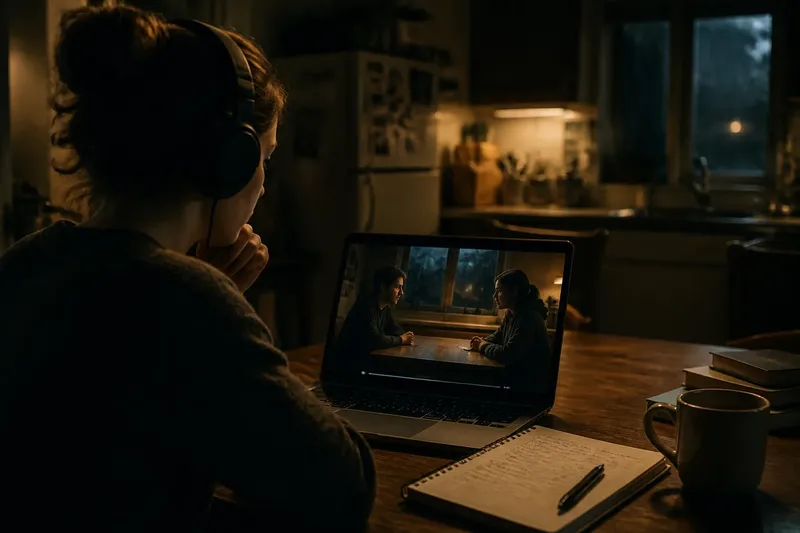
The common mistake in a rewatch is to follow the dialogue again and let everything beneath it blur into background. A rewatch for the sounds between the lines can reveal what that costs: the room’s steady texture, a pause that changes the mood, or a noise from somewhere the camera never shows. Use three focused listening passes to catch those cues.
Imagine Maya, an invented film student, revisiting a scene she already knows: two siblings sit at a kitchen table after an argument. One asks whether the other is leaving; the answer is a shrug. Maya’s first viewing followed the exchange. Now she wants to hear how the sound around it shapes the moment.
Choose a familiar scene and set up three listening passes
Pick a scene you can replay easily, preferably one with a clear change in attention or mood. A conversation, a character waiting alone, or a decision nobody says aloud can all work. Familiarity helps because you are less busy tracking the plot.
Choose a passage long enough to include what comes before and after its central pause. Headphones may help with quiet details; ordinary speakers in a calm room can work too. Keep the playback speed unchanged, since altered timing can make a pause feel different from the one the scene presents.
Use this compact sequence to keep the rewatch focused:
- Room texture: Listen for the continuing sound bed, such as a hum, hiss, or distant wash. Note whether it stays steady or becomes clearer during quiet.
- Pauses: Follow the gaps around speech. Record any breath, movement, or background sound that fills or interrupts them.
- Offscreen sound: Attend to sounds whose sources are outside the visible image. Note when they enter, fade, or redirect your attention.
Maya uses these three passes on the kitchen exchange. She does not try to identify every source or explain every cue at once; she records what she hears before deciding what it might mean.
Listen for the room’s steady texture
On the first pass, let dialogue remain present but stop treating it as the main event. Room tone is the continuing sound that gives a place an acoustic character. In a kitchen, it might include a refrigerator hum, distant plumbing, ventilation, or traffic beyond a window. A finished scene may also use a composed or restrained sound bed, so a faint sound need not be a literal recording of that location.
Notice whether the texture stays constant, grows clearer during quiet, or changes around an edit. A steady hum may make a room feel inhabited; a sudden thinning of the background may make a pause feel exposed. These are possibilities, not fixed meanings. The surrounding image and story shape how a sound lands.
Maya hears a low appliance-like drone beneath the siblings’ conversation, then notices it more clearly when they stop speaking. She writes, “low hum continues through pause,” rather than deciding immediately that it symbolizes something. That plain observation is like keeping the label on a jar: it helps her distinguish what she heard from what she inferred.
Let pauses keep their full shape
On the second pass, follow the gaps around speech. A pause can hold breath, movement, room tone, or a sound that arrives just late enough to redirect attention. Listen for where it begins, whether it feels clean or filled, and what happens immediately before someone speaks again.
Rather than measuring a pause or judging it against a rule, ask whether it feels settled, interrupted, or difficult to sit through. Captions may omit room tone and small incidental sounds, so a listen without reading them can help focus attention on the soundtrack.
Maya hears a sibling’s chair creak after the shrug and before the reply. The refrigerator hum carries on. The pause now feels physical, not blank. She can connect that reading to audible details and visible action without claiming to know the character’s hidden thoughts.
Track sounds beyond the visible frame
On the third pass, attend to offscreen sound: a sound whose source is not visible at that moment. It might belong to the same space, such as a car passing beyond a kitchen window, or it might remain ambiguous. Listen for when it enters or fades, how its loudness changes, and whether it seems near or far. Do not name a source unless the scene gives you a good reason.
Offscreen sound can widen a setting beyond the frame, suggest that a character is attending to something the viewer cannot see, or pull focus away from a face. Placement matters. A noise during a line may compete with the words; the same noise during a pause may become the event the scene asks you to notice.
Maya catches a soft clatter from another part of the house just after the question. Neither sibling reacts. She cannot tell whether it is a utensil, a pipe, or a sound added for the scene, so she writes “brief distant clatter.” Its source stays uncertain, but its timing makes the house feel larger.
Questions that clarify a focused sound rewatch?
What counts as room tone?
Room tone is the continuing background sound associated with a space, whether recorded there or shaped for the finished scene. Listen for its texture and continuity rather than expecting one particular appliance or environmental noise.
Should I use headphones or speakers?
Headphones may make quiet details easier to separate, while speakers can preserve a more natural sense of the room. Choose the setup that lets you listen comfortably, and keep it consistent across passes.
What if I cannot identify an offscreen sound?
Describe what you hear, such as a short metallic clatter or a low distant rumble, without assigning it a source. Its timing and effect on your attention can still matter.
Does a pause always signal tension?
No. A pause may suggest hesitation, comfort, distraction, grief, or simply time for an action to register. Read it alongside the performance, surrounding sound, and what the scene has already established.
Connect listening notes to a grounded reading
After the passes, Maya reviews her notes: the hum continues through the answerless pause, the chair creak makes the pause feel physical, and the distant clatter opens the kitchen onto the rest of the house. She keeps each claim modest. The sounds guide attention, but they do not dictate a single interpretation.
Say you revisit a familiar waiting-room scene. On the first pass, you note a ventilation hiss that continues under the dialogue. On the second, you hear a character check the door during a gap in conversation. On the third, an announcement comes from beyond the visible hallway. Your notes now link observable details: the character checks the door before the announcement, and the hiss remains after it ends. You might infer that the character is waiting for news, but the timing—not a claim about hidden thoughts—is what another viewer can hear too.
For a rewatch of the sounds between the lines, choose one cue that changed your experience and name the moment it mattered. Keep the note tied to timing, texture, or distance. That gives you a specific way to hear how a scene’s sound guides attention, even when nobody says what the moment means.